








User Status

Du bist nicht angemeldet.

Suche


Kommentare

Ebenfalls durchaus hörenswert,...
Ebenfalls durchaus hörenswert, die in der Diagonal-Ausgabe...
adresscomptoir - 2022/10/25 22:33
Guardian: listed status...
Guardian: listed status für 6 Denmark Street - https://www.theguardian.co m/music/2016/mar/22/sex-pi stols-house-denmark-st-lon don-listed-status
adresscomptoir - 2022/09/09 09:53

Archiv

Januar 2026
Mo
Di
Mi
Do
Fr
Sa
So


 1 
 3 
 4 
 5 
 6 
 7 
 8 
 9 
10
11
12
13
14
15
16
17
18
19
20
21
22
23
24
25
26
27
28
29
30
31


Status

Online seit 7514 Tagen
Zuletzt aktualisiert: 2026/01/02 14:03

Credits

powered by Antville powered by Helma

sorua enabled
xml version of this page
xml version of this page (summary)
xml version of this page (with comments)

twoday.net AGB

Samstag, 23. Februar 2008

Sarg-Kunst in Ghana

tschumiDarauf gestoßen bin ich ja schon bei einem Besuch des British Museum vor bald sieben Jahren, mein Berlin-Aufenthalt Anfang dieses Monats samt Besuch der Museen in Dahlem erinnerte mich wieder daran: An die reichlich abgefahrenen Särge der Ga, die Formen von Flugzeugen, Kakaobohnen, Mehlsäcken oder Colaflaschen haben. Die Riesenmaschine berichtete schon vor einiger Zeit darüber, und erfreulicherweise gibt es auch einen Bildband, den ich mir selbstredend gleich zugelegt habe:

Tschumi, Regula: Die vergrabenen Schätze der Ga. Sarg-Kunst aus Ghana. Bern: Benteli, 2006. [Verlags-Info]

Freitag, 22. Februar 2008

Namenstag der Santa Precaria

Der 29. Februar ist der Namenstag der Santa Precaria und wird als Aktionstag gegen Prekarisierung begangen; in Wien gibt es an diesem Tag zwischen 10 und 13 Uhr an der Ecke Favoritenstraße - Viktor-Adler-Markt einen Altar der Heiligen Precaria samt Kondolenzbuch, Infostände der Organisationsplattform ‘Freunde der Precaria’, SambaATTAC, Straßentheater der Gruppe “dastheater” und einen Medienrundgang mit den Sprechern einiger teilnehmender Organisationen. Weitere Informationen unter Santa Precaria und Sankt Precarius.

Donnerstag, 21. Februar 2008

CfP: The Political Economy of Academic Journal Publishing

Interessanter Call for Papers:

The Political Economy of Academic Journal Publishing

Call for Papers & Proposal for a Special Issue of ephemera: theory & politics in organization
(www.ephemeraweb.org) to be edited by Craig Prichard & Steffen Böhm.

‘Publish or perish', that famous diktat, is without doubt the central, pervasive and unassailable logic governing most academic work in the current period. The central figure, the one around which this decree currently revolves, is, of course, the academic journal article. While the book and perhaps the lecture remain important in some locations, the journal article has become the core currency and the very measure by which academic jobs, careers, reputations and identities are made and traded.

Yet despite all the hours congealed into ‘the article', and the years spent perfecting the craft of writing for journal publications, many of us know very little about the industry that surrounds our work and to which we contribute so much. Of course, we may recall certain events: Some will have noted the sale, for nearly US$1 billion, of Blackwell's 875-strong journal collection to US company Wiley in late 2006. Others will be aware that they can now, if they so wish, purchase their already published papers as individual downloads on Amazon.com. There will be some for whom internet-based open access journals (such as ephemera) or online repositories are now the natural home of their written academic work. There may be others whom have confronted the crisis that surrounds journal subscription pricing and are seeing the demise of library journal collections in their university libraries. And there may be a few among us who recognize those journals and publishers that feature in Ted Bergstrom's hall of shame for the most expensive journals currently published
(http://www.journalprices.com). But for all those that recognize such events and processes there are many more for whom such events have ‘taken a while to get our attention', as Ron Kirby, the University of California mathematician who led the editorial revolt against Reed Elsevier's pricing strategy at the journal Topography, said recently.

This special issue is an invitation to begin to change that. It is a call for contributions that directly and critically explore the dynamics, problems, tensions, and issues that surround the political economy of academic journal publishing. Part of this is an invitation to explore alternative ways of organizing the production of academic work, particularly the theory, politics and organization of open access publishing, which is, perhaps, the most promising initiative to challenge corporate forms of journal publishing today. This exploration of alternatives is an acknowledgement that the writer and academic author could be regarded, at various moments, as agent, challenger and also victim of hegemonic regimes. We invite inter-disciplinary contributions from around the world and particularly welcome submissions from countries of the Global South, which have seen particular growth of open access publishing initiatives.

Possible topics include (this is not an exhaustive list):
- Political economy of open access publishing
- Academic publishing and the knowledge society
- How to organize an open access journal?
- Political economy of corporate and university press publishing
- The place of journal publishing in the overall apparatus of academic publishing
- Historical perspectives of academic journal publishing
- The hegemony of UK/US publishing & referencing and its global economy
- Issues of censorship in the process of publishing
- Issues of inclusion/exclusion in journal publishing
- Academic publishing in the Global South
- Desires and identities connected to journal publishing
- The public sphere and journal publishing: Who do we really reach?
- The role of journal publishing in the setup and maintenance of professions and disciplines
- Cases of open access publishing
- The organisation of open access repositories
- Case histories of open access repositories
- Copyright vs Copyleft
- Publishing and language: the hegemony of English
- Intellectual property and the impact on academic publishing
- What is a journal's ‘impact' and how to measure it?
- The specific role of ephemera: theory & politics in organization in the world of journal publishing and potential ‘alternative impact factor measurements'
- Academic evaluation and performance measurement systems (such as the RAE in the UK)
- Publishing outside academia

Full papers should be submitted to the special issue editors via email by 1 November 2008. Papers should be between 5000 and 9000 words; multimedia work is welcome. All submissions should follow ephemera's submission guidelines:
http://www.ephemeraweb.org/journal/submit.htm. All relevant submissions will undergo a double blind review process. The special issue is scheduled to be published in late 2009.

Special issue editors:

Craig Prichard
Tari Whakahaere Kaipakihi ,
Te Kunenga Ki Purehuroa
Pouaka Motuhake 11-222
Papaioea, Aotearoa
Department of Management 214
Massey University, Private Bag 11-222
Palmerston North, New Zealand
Phone: +64 (0) 6 356-9099 ext. 2244
Email: c.prichard(ädd)massey(pungt)ac.nz

Steffen Böhm
School of Accounting, Finance and Management
University of Essex
Wivenhoe Park
Colchester CO4 3SQ UK
Phone: +44 (0) 1206 87 3843
Email: steffen)ädd)essex(pungt).ac.uk


[via Linkslog]

Mittwoch, 20. Februar 2008

Hausnummern in Rom

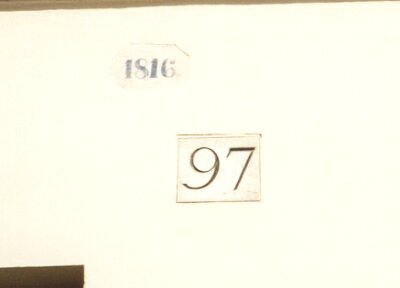
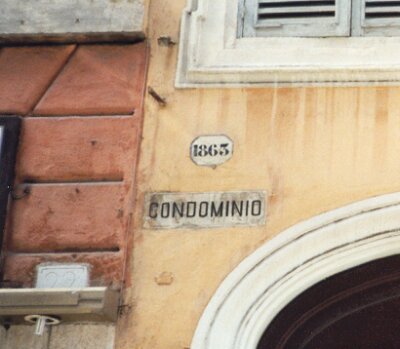
So gut wie nichts weiss ich ueber die Geschichte der Hausnummerierung in Rom. Vereinzelt gibt es aber Häuser, auf denen zusätzlich zur straßenweisen Orientierungsnummer noch eine vierstellige Nummer angebracht ist:

Rom_1816_PiazzaFarnese97
Rom, Piazza Farnese 97

Rom_1863_ViadeiGuibbonari23
Rom, Via dei Guibbonari 23

Dienstag, 19. Februar 2008

Eliteuni versus Arbeitsbewegungsgeschichte

Nicht wirklich verwunderlich: Eine Eliteuni wie die FU Berlin ist sich zu fein für eine pöbelige Zeitschrift zur Arbeiterbewegungsgeschichte - nämlich Internationale wissenschaftliche Korrespondenz zur Geschichte der deutschen Arbeiterbewegung (IWK) - und setzt deren Redaktion vor die Tür. Mehr dazu hier.

Montag, 18. Februar 2008

Programm der Foucault Konferenz online

Am 16./17. April findet an der University of Massachusetts, Boston das Fifth Annual SOCIAL THEORY FORUM statt, mit dem Thema A Foucault for the 21st Century: Governmentality, Biopolitics & Discipline in the New Millennium. Auf der Konferenzhomepage ist nunmehr das vorläufige Programm online. [via Foucault-L]

Sonntag, 17. Februar 2008

Žižek in Libération

In Libération schreibt Žižek über Utopie, Robespierre und Chavez und violence populaire.

Ö1: Frühe Frauenbewegungen in Österreich

Ö1 strahlt am Donnerstag in den Dimensionen (21.2.2008, 19.05-19.30, Stream) eine von Sabrina Adlbrecht gestaltete Sendung zur Frauenbewegung in Österreich 1848-1938 aus, ausgehend von dem im Adresscomptoir [1/2] bereits erwähnten Forschungsprojekt Frauenbewegungen - Digitales Archiv und Historiographie.

Samstag, 16. Februar 2008

Ö1 Podcast zu Hexen und Magie/Interview mit Martin Scheutz

Ö1 sendete diese Woche in der Reihe Betrifft Geschichte fünf jeweils fünfminütige Beiträge von Martin Scheutz zum Thema Magisches Naturwissen und Hexenjagd. Die Podcasts stehen gratis zur Verfügung.

Ausstellung zur Versuchung des heiligen Antonius

Im Hamburger Bucerius Kunst Forum findet zur Zeit die Ausstellung Schrecken und Lust. Die Versuchung des heiligen Antonius von Hieronymus Bosch bis Max Ernst statt, was ja immer schöne Monster-Bilder verspricht. Der dazugehörige Katalog ist bei Hirmer erschienen:

Westheider, Ortrud/Philipp, Michael (Hg.): Schrecken und Lust. Die Versuchung des heiligen Antonius. Von Hieronymus Bosch bis Max Ernst. München: Hirmer, 2008. [Verlags-Info]

Nachtrag: Ein Bericht der NZZ zur Ausstellung.

Freitag, 15. Februar 2008

ORF Fuzo: Interview mit Andrej Holm zur Überwachung

Die ORF Futurezone bringt ein Interview mit Andrej Holm und Anne Roth zu deren Erfahrung mit Terrorismusverdacht und permanenter Überwachung.

Lunapark21

Zum Glück werden linke Zeitschriften nicht nur eingestellt (vgl. hier), sondern zuweilen auch neu gegründet. So ist vor kurzem die erste Ausgabe von Lunapark21 - Zeitschrift zur Kritik der globalen Ökonomie erschienen. Lunapark21 erhebt den Anspruch, ein[e] populär gemacht[e], gut lesbar[e] Zeitschrift zur Kritik der internationalen kapitalistischen Ökonomie zu sein und auch Berichterstattung über die weltweiten sozialen Bewegungen zu bringen. Ein Blatt, das auch die Notwendigkeit von Alternativen und Utopien postuliert und sich dem Motto verpflichtet sieht: „Eine andere Welt ist möglich, eine andere Ökonomie ist nötig!“. Freundlicherweise gibt es auch einen RSS-Feed.

Donnerstag, 14. Februar 2008

Website zu: Die Arbeitslosen von Marienthal

Ist wirklich beeindruckend: Eine von Reinhard Müller recherchierte Website zur klassischen Studie Die Arbeitslosen von Marienthal. [via Arcana]

CfP: La mesure cadastrale XVIIIe-XXe siècle

Auf Calenda: Ein Aufruf zu einer Konferenz zur Geschichte des Katasters.

CfP: Jazz hinter dem eisernen Vorhang

H-SOZ-U-KULT veröffentlicht einen Call for Papers zu Jazz hinter dem Eisernen Vorhang /Jazz behind the Iron Curtain.

An Material aus meiner Diplomarbeit (PDF) und meinem ZeitRaum-Artikel (PDF) kann ich da beisteuern:

Kresalek, Gábor: "Singend wird das Leben schön". Das stalinistische Gesellschaftsmodell im ungarischen Film (1948-1953). In: Österreichische Zeitschrift für Geschichtswissenschaften. 3.Jg. (H.1/1992). S.31-42. (S.41f kurzer Verweis auf die ungarischen Swing Tónis).

Starr, S. Frederick: Red & Hot. The Fate of Jazz in the Soviet Union. 1917-1980. New York/Oxford: Oxford Uni-versity Press, 1983. (auf deutsch 1990 bei Hannibal erschienen)

Tyrmand, Leopold: Dziennik 1954. Wersja oryginalna. Warszawa : Prószyński i S-ka, 1999. (Da soll's um die polnischen bikiniarz gehen).

Und für die Tschechoslowakei gibt's dann selbstredend noch die Romane von Josef Škvorecký (Wikipedia/Homepage).

Mit Kanonen zur Kunst

Die WOZ bringt eine wichtige Ergänzung zum Zürcher Kunstraub, denn: Ohne seine Waffen hätte Emil G. Bührle nie Bilder kaufen können. Ohne ihre Waffen hätten die Räuber am Sonntag seine Bilder nicht stehlen können. Und, frei nach Brecht: Was ist schon ein Kunstraub gegen die Gründung einer Kunstsammlung? Wie beispielsweise die des Schweizer Waffenexporteurs Bührle, dessen Vermögen in den Jahren 1936 bis 1944 von 0,14 auf 127 Millionen Franken anwuchs.